Friday, April 16, 2010

MSPIFF 2010: The Impossible Shuffle

As recommendations and requests float in, I try to negotiate a realistic but ambitious plan of attack for MSPIFF. No doubt this plan will change more than once as I talk to more people about films they've seen. See any places where I am going wrong? I am open to suggestions!


For resources on what to see at MSPIFF check out the following:

Thursday, April 15, 2010

MSPIFF 2010: Opening Night MAX MANUS

It seems somewhat fitting and ironic that on the opening night of the 28th Annual Minneapolis St Paul International Film Festival the twit-blog-osphere would be all a-buzz with the 63rd Cannes lineup. Weerasethakul? Kiarostami? Oliveira? Hong? Godard? Who cares! We've got Joachim Rønning and some obscure WWII Norwegian film called Max Manus!

For the first time ever the MSPIFF opens, runs and ends in the same venue. Opening nights the past two years have commenced on the sterile grounds of the chain theater at Block E; the two years before that at the homey neighborhood one-screen giant the Riverview; and prior to that in the opulence of the Historic State Theater. Oh, those were the days! Hosting the 'opening gala' at the much more limited and humble setting of the St. Anthony Main Theaters (where the festival will run on five screens for the next two weeks) not only speaks to local organizational shifts, but also to a wider economic reality of film festivals. With access to films growing exponentially, creating a film event—like a film festival or a special repertory screening—seems both cutting edge and seriously old school. Thankfully, such screenings and festivals are able to draw crowds on both those characteristics. Year after year I am encouraged by the intrepid local audience, not only at MSPIFF, but also at the Trylon or the Heights or the Walker. These are people after my own heart, seeking out and reveling in unique film experiences.

Opening night at this year's MSPIFF was no different. St Anthony was buzzing with people excited to see a film that matters more to the local community, with strong Norwegian ties, than it does to industry hype, where Max Manus barely made a blip. Max Manus tells the story of the Norwegian resistance during Nazi occupation from 1940 to 1945. Max Manus, one of the leaders, is shuttled back and forth between Sweden, Norway and England to escape capture as his fellow soldiers are either killed or captured. Although my Norwegian WWII history is lacking, it is obvious that the film goes to great pains to be accurate. The set design is particularly impressive, especially those involving the bombing of the boats in Oslo Bay and the infamous bombing of the SS Donau. On par with the beach scene in Atonement, the physicality of the ships amongst a very specific setting is stunning. Although the production values are high in Max Manus, the story follows a very familiar trajectory that won't lead to any surprises. The Nazis are uncomplicated villains and our heroes are unequivocally self-sacrificing martyrs. Emotional bells and whistles perhaps work better on those more aware of the historical gravity of the narrative, but was overall bland despite engaging moments of battle or suspense. In attendance was Gunnar Sønsteby, part of the Norwegian resistance and portrayed in the film. He said a few words before the film and lended some credence to the film itself.

And so it begins. A crowd-pleasing opening to two weeks of film phantasmagoria that I have to figure out how to navigate. Stay tuned.

Tuesday, April 13, 2010

Good News from Criterion

If you get Criterion's newsletter and opened it and made it to the bottom of the page, you saw this coy graphic last week:


It looks like chaos will reign at Criterion, and I for one couldn't be more happy. Von Trier's engages in a little self-criticism for our pleasure and at our expense. Antichrist is currently available for view on-demand at various places, but, considering that this film was shot on HD, a Blu-Ray is likely to look better than the 35mm print you saw in the theater. And make no mistake, Antichrist has some stunning images. There are also, of course, the more talked about horrific images that made many people shy away from seeing this film in the theater, and rightly so. On a second viewing there may be scenes where I decide to turn my head, so I'm not going to tell anyone that the 'bad' scenes aren't that bad. But, what I will do when this movie is released on Blu-Ray is nail down scenes and times where people should either fast forward or avert their eyes. I'll even come up with sterile descriptions of the scene. Is this cheating? Maybe, but the most brutal scenes are in effect ones where Von Trier punches us in the face and we cannot punch back. I think if you don't want to be punched, that's fair, and it won't take away from the film.

Sunday, April 11, 2010

Building the Best Film Fest: full disclosure

With the Minneapolis St Paul International Film Festival less than a week away, the Star Tribune's Colin Covert ponders, what makes a good film fest? Pooling opinions from a number of people, including myself, the article builds a comprehensive and thoughtful look at what a Midwest film festival is all about. The Twin Cities is not, and never will be, a so-called major market, which makes the two week, 100+ film MSPIFF all the more important to film fans who call the Twin Cities home.

Including a hang-about like me with a group of experts may be a stretch, but I guess if I'm going to be an expert at anything, it's going to be watching movies. Last year I caught 35 films at MSPIFF and I'll try to do the same this year. That's not bragging rights, but merely an admission of my commitment to see these films on the big screen before they disappear.

I'm just as excited this year as I am any other year to dive in and take in as many films as I possibly can without losing my job, my partner or my sanity. I'm going to do my best to report on what I see as often as I can. Until then, here are my answers to the full list of questions from which the Star Tribune article evolved from:

What makes a good film festival?

Organization and good films. Organization seems hit or miss for MSPIFF, but with the bulk of films and times already available online, this year seems to be right on track. What I mean by ‘good films’ is that someone is screening things with a critical eye and an open mind.

With the glut of films in the marketplace, what should the selection criteria be for a major urban film festival?

A film festival reflects the vision of the curators. This is pretty easy to see with various staff changes to the fest over the years. (Or if you look at the bigger festivals – each has a flavor all its own.) However, seeing that MSP is not LA or NYC, I think it is extremely important (when possible) for curators to be aware of the films that have distribution but are not likely to receive a release in the Twin Cities. Munyurangabo, Dry Season, Three Monkeys, Oblivion – just a few examples from last year.

To what degree should it serve and promote local filmmakers?

Including local filmmakers is extremely important. They are a vital part of the film community that should be involved in this event. I feel like the mix MSPIFF has is good.

What other events should be included besides film screenings? How important is it to host visiting filmmakers? What’s the ideal way to have them interact with audiences?

Having visiting directors makes a screening special. Even if the film does come to town later or come out on DVD, having the presence of someone involved with the film makes it unique. In my experience, audience Q&As are a disaster. Post-screening discussions should be prepared by a moderator, and, best possible scenario, arrange a meet and greet before or after the film at an local establishment. (Loads of options for places down there on St Anthony Main for this: Aster Cafe, the extra room Pracna has, Vic’s.) Someone dying to talk to the director should get this chance.

What about the size and scope? Is a program with 100+ offerings more exciting than with one offering less than 50?

Yeah, I wonder about that. I think it might be more like, why not do 100 really well and not 140. I think 50 would take away from the event it has become.

The Twin Cities is host to a growing number of ethnic film festivals: Italian, Jewish, Arab. Is that a good thing or does it bring on film fest burnout?

No way. Obviously each of these series/festivals mean different things to different people, but what they all mean is getting people out of their house to see a film. They all reinforce the social aspect of film going, and reassert a sense community.

How can moviegoers best navigate among dozens of films? Should the screenings be arranged into categories, so that documentary fans and French film buffs can easily find multiple films arranged under each heading?

I’ve always found the country indexes very useful. As far as choosing films, go with your impulse. I’m a sucker for a compelling photo or title. But I know that I am also dedicated to films from specific countries. Although going with my impulses has led to the greatest discoveries, it has also led to some real clunkers. Of course anyone willing to do some research, there are trailers and reviews out there for most of these films. You can also check the fab reviews in the Star Tribune!

Many fests charge entry fees and issue cash prizes to the best films. Does that add to the prestige of the event or is it a distraction from the main business of exhibiting films?

I’m not sure. The voting thing drives me batty though. It makes a cluster after the film; it’s a huge waste of paper; and it has nothing to do with the best of the fest. Let people vote online if they want.
Friday, April 9, 2010

Twin Cities Film 4/9 - 4/15

Hitchcock at the Trylon and the Riverview
Take-Up's "Alfred Hitchcock: Across the Decades" continues this week with The Lady Vanishes Friday and Saturday at the Trylon and Notorious Monday at the Riverview. The Lady Vanishes (1938) is an early Hitchcock film that is one-thirds mystery and two-thirds witty, peculiar charm. Notorious (1946) is a totally different Hitchcock creature: stylish and refined with an edge of elegance that can only be brought to a film by the likes of Cary Grant and Ingrid Bergman. It's a lavish film experience.

Buy your tickets in advance, especially for The Lady Vanishes at the Trylon. (Three of the five shows last weekend sold out!) The Lady Vanishes screens five times at the Trylon: Friday 7 & 9pm, Saturday 5, 7 &9pm. Notorious screens Monday 7:30pm at the Riverview. I'll be projecting Saturday night at the Trylon, so stop by and say hi. (Click poster below for more information or tickets.)


Jewish Film Festival
The ambitious Jewish Film Festival kicked off last night and continues through March 18. With a rich selection of dramas and documentaries, you really can't go wrong. With the exception of the opening night, all films will be screened at the Sabes JCC. (Click below for more info and a full list of films.)


Views from Iran at the Walker
The Walker's "Views from Iran" starts today and runs over the next few weekends with some exciting screenings and events. In addition to the seven films included in the series, the Walker will host two visiting filmmakers, Shirin Neshat and Rakhshan Bani-Etemad, who will present their new films. In light the recent arrest of award winning filmmaker Jafar Panahi in his home country of Iran, the series offers a unique opportunity to understand the issues and constraints that many Iranian artists face. The premiere of Asghar Farhadi's About Elly plays tonight, Friday, at 7:30pm and there is a lecture with journalist Laura Secor Tuesday at 7pm.


Opening This Week in the Twin Cities

Three films open at the various Landmark Theaters this week and hoping to catch all three before hell breaks loose with the MSPIFF. The Most Dangerous Man in America and Vincere, both at the Lagoon, are first in line. The Most Dangerous Man in America is the story of Daniel Ellsberg, a high-level Pentagon official and Vietnam War strategist, who attempted to expose the lies told by the government about the Vietnam War. The trailer looks amazing and I expect there will be some relevance, even if it is indirect, regarding the lies of the previous administration on the Iraq War. The Most Dangerous Man was nominated for an Academy Award but lost out to The Cove. The Greatest opens at the Edina. (Click below for more info.)


Opening in wide release this week is an odd mix of films: Date Night with Steve Carell and Tina Fey, some obscure (and most likely awful) horror film called The Black Waters of Echo's Pond, and the let's-hope-it's-not-as-heavy-handed-as-the-title-but-I-bet-it is Letters to God. Although I probably won't get around to seeing Date Night, if that film isn't a slam dunk, I don't know what is. Titans, you are going down! (Click below for official websites.)


Also worth noting, MFA brings A Town Called Panic back at St Anthony Main. I heard nothing but good things about this strange French animation film but was unable to make it during its one-week run at the Lagoon. Now everyone has a second chance!


And last, but not least, I would be remiss if I didn't mention that the Minneapolis St Paul International Film Festival is just one week away. The online schedule is up and running and individual tickets are for sale online and at St Anthony Main Theater. Passes and programs should be available this weekend. I'm excited and can't wait to OD on films for two weeks. Will Getafilm and I resurrect the Film Goats? Either way, I'll see you there.


Thursday, April 1, 2010

Twin Cities Film 4/2 - 4/8

Lots of five star films screening this week. I've decided to go the image route again. Click any image for a link to more information. The verbiage is redundant. But please take note of the special screening of Orson Welles' F For Fake this Sunday - do not miss it. Also Hitchcock mania starts at the Trylon and Riverview. Watching Psycho in a packed house at the Riverview is going to be amazing. Ticket sales for all the Hitchcock films are brisk, so buy in advance.

Special Screenings:


Opening:

Home Movies - March 2010

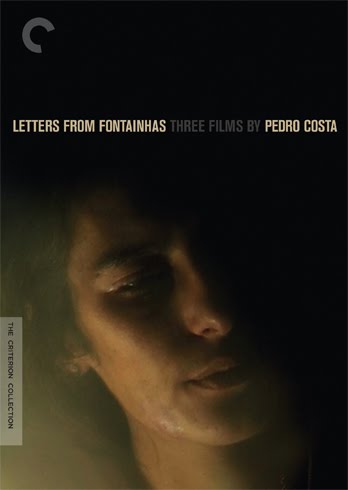
Criterion celebrates my one year anniversary of doing Home Movies for InRO with one of the most important releases to hit U.S. soil: “Letters From Fontainhas: Three Films by Pedro Costa.” I wish I could give it a proper appraisal, but it literally hit my door today, sitting next to my computer in the shrink wrap as I type these words. (Falling into the rabbit hole is something I'll do later and report back.) Joining Pedro Costa this month is four other recommendations and twelve other notable releases I couldn’t resist pairing in double features.


Le
tters from Fontainhas: Three Films by Pedro Costa [Criterion]
What Criterion misses when they introduce Pedro Costa as “one of the most important artists on the international film scene today” is that he is also of the most neglected in the way of accessible English friendly DVDs. Until recently, that is. Coming on the heels of two worthy imports of The Blood (1989) and Where Does Your Hidden Smile Lie? (2001), Criterion completes the perfect circle with this 4-disc set which includes his Fontainhas Trilogy: Osso (1997), In Vanda’s Room (2001) and Colossal Youth (2006). This set does the invaluable service of pulling back the curtain on these much talked about but rarely seen films. Criterion provides access for those of us who have had only minimal exposure to Costa, but can’t wait for more, and to those who believe Costa is a mythical creature concocted in esoteric film circles. It was Colossal Youth that brought Costa to many people’s attention, but his interconnected Fontainhas Trilogy is the master cycle that earned him overwhelming critical claim. All shot in the Fontainhas slums outside of Lisbon, the trilogy offers portraits of the cast aside citizens of Costa’s homeland. The set is less an introduction on Costa than it is a master’s class, supplementing the films with an entire disc of documentaries, commentaries, interviews, essays and photos. Also included are two recent short films, Tarrafal and The Rabbit Hunter, that Costa made for two 2007 omnibus films, The State of the World and Memories respectively. My fervor for supporting Criterion—and the institutions who have screened his work theatrically (locally the Walker Art Center)—in their visionary efforts to make these films available is staunch. Save your money. Buy this set.


The Complete Magick Lantern Cycle by Kenneth Anger
[Fantoma]
I wish there was a way for me to recommend this set and not feel guilty about the fact that Kenneth Anger, still alive, is most likely not receiving the financial benefit he deserves from its release. Anger’s discontent with Fantoma’s first two DVDs was more than apparent when I had the opportunity to meet him in 2007. Perhaps things have changed, but there is nonetheless something dodgy about this release. First, “The Complete Magick Lantern Cycle” seems to be a repackaging of Fantoma’s own “The Films of Kenneth Anger Vol 1” and “Vol 2” only at a cheaper price. Secondly, this release comes almost a year after BFI’s reportedly far superior Blu-Ray release that used Fantoma’s transfers. I’m confused. If that is too much politics to handle, I don’t blame you. Bottom line: Anger is a living legend of the avant-garde and his films, and the limits of their influence, know no boundaries. This set (or the previous set or BFI’s Blu-Ray) is the pudding of the proof. Included are 10 of his most well known shorts, from his groundbreaking Fireworks (1947) to his bombastic Lucifer Rising (1981). Controversial and confrontational, Anger has worked his way from underground filmmaker to tattle-tail author to the well-deserved recognition of the film community at large.

The Beaches of Agnès (2009) by Agnès Varda [Cinema Guild]
Agnès Varda, 80 year-old grandmother of the French New Wave, makes it very clear that she is still an artist to be reckoned with. Working in the style of a film essay, Varda’s autobiographical documentary is drawn with such charm and openness that it will have no problem winning over new admirers while reinforcing the glowing adoration of devoted fans worldwide. Beaches places Varda’s irresistible persona front and center as she chronicles her life as an experimental work and her work as an experimental life. Varda starts with her childhood in Belgium and guides us through her life using archive photos and footage, interviews, reenactments, staged vignettes, and Varda herself revisiting the landscapes of her past. Continually exploring and expanding her creative impulses, Varda seems more alive than ever. The Cinema Guild makes the most of this release and includes three previously unavailable short films by Varda. Around Trapese Artists and Daguerre-Beach are fully realized visual landscapes of vignettes featured in the film, and the third, Le Lion Volatil, is a fiction film made in 2003 loosely contemplating the permanence of the bronze Lion of Belfort statue through a romantic young woman.

We Live in Public (2009) by Ondi Timoner [IndiePix]
There is a fair amount of evidence that the Internet, including the insipid social networks that we all indulge in, has had a tremendous effect on 21st century life as we know it. But there are a few caveats to this notion: first is that this only includes the most privileged in a worldwide population, and second is that the greatest impact has not been social, but individual. Ondi Timoner’s fascinating documentary supports both assertions to an alarming or reassuring degree, depending on which Kool Aid you drink. Over ten years in the making, We Live in Public documents Josh Harris, “the greatest Internet pioneer you’ve never heard of.” One of the first people to realize the potential webcasting, Harris was also excited, not scared, by the notion of how the Internet could connect us all, all the time. The eventual loss of privacy was like a challenge to Harris. His experimental underground commune project walks a very fine line between visionary and completely crazy. Timoner, embedded in the action, keeps a surprisingly even-hand in doling out the narrative culled from thousands of hours of footage. Included on the DVD are two commentary tracks, one by Timoner and one by Harris, recorded during his first screening of the film. The DVD is far from the only way to see this film, and can be found on-demand via the Internet and cable, but I guarantee that after seeing the film you will wish you had the commentaries to help you digest. For anyone reading this review, exclusively online, We Live in Public is a must see.

The African Queen (1951) by John Houston [Paramount]
I’m going to equate The African Queen to comfort food. Although highly subjective, comfort foods usually follow demographics and offer the simple yet oh-so satisfying taste of the familiar. I’m a pretty good sport about indulging in, and sometimes even enjoying, others' form of comfort food, and The African Queen is no different. An enjoyable adventure-cum-romance, The African Queen survives on the notoriety of its director, John Houston, and teems with life thanks to the chemistry between Kathryn Hepburn and Humphrey Bogart, both beyond their popular peak, but far from dead. The African Queen represented a triumph for both, but especially Bogey, earning him his only Oscar in a very long career. But the thing that makes this classic of classics’ release so notable is that, until now, it has been unavailable stateside on DVD. Whatever the delay, Paramount fortunately had the foresight to do the painstaking restoration work that the Technicolor film needed. The special features make spending the money on the ‘Commemorative Edition’ worthwhile, notably an audio recording a Lux Radio Theater version with Bogey reprising his role with Greer Garson and a copy of Hepburn’s now out-of-print 1987 memoir The Making of the African Queen: Or, How I Went to Africa With Bogart, Bacall and Houston and Almost Lost My Mind.

Double Dog Dare Double Features


Ponyo
(2009) by Hayao Miyazaki [Disney]
Fantastic Mr. Fox (2009) by Wes Anderson [Fox]
Two of the most enjoyable theatrical experiences from last year may play out even better at DVD, particularly if you have young ones at home. That being said, I would never ghettoize either film as being a children’s movie. The wild creativity of Ponyo and the subtle humor of Fox never pander to kids as if they are stupid. Ponyo may not be Hayao Miyazaki’s best, but it delivers all the heart-warming adventure that you would expect from one of his films. Miyazaki is a singular talent who has the ability to turn a simply story into visual magic with earth shattering gentleness. Wes Anderson pulls out a huge surprise with a stop motion animation that, dare I say it, has more life that his live action films. Anderson and Noah Baumbach work wonders scripting this low-key escapade carried out by a group of richly imagined, preppy critters. Family movie night just got better with these two films regardless of the ages in your family.


Where the Wild Things Are
(2009) by Spike Jonze
Tell Them Anything You Want (2009) by Spike Jonze and Lance Bangs
Watching Spike Jonze’s adaptation of Maurice Sendak’s book is like having some sort of window onto your childhood psyche. Max’s dark and insecure feelings were intuited content as a kid, and as a cognizant adult watching the film, those irrational emotions of pain and joy hit hard. If seeing “Where the Wild Things Are” in the theater wasn’t enough, it’s time to watch it again at home and pick up the documentary that Jonze made in tandem with the film. Tell Them Anything You Want is an intimate portrait of Sendak and proof to the care and consideration Jonze took in adapting the book. The documentary is a fine companion to the film. So fine, in fact, you have to wonder why it’s not a special feature on the DVD release of the film.


Bigger That Life
(1956) by Nicholas Ray [Criterion]
Dillinger is Dead (1969) by Marco Ferreri [Criterion]
These two timeless films from Criterion are a reminder that newer isn’t always better (an ethos that I sometimes have a hard time remembering.) Marco Ferreri’s laconic Dillinger is Dead from 1969 is as surreal and strange as anything heading down the contemporary experimental pipeline; Nicholas Ray’s intense Bigger Than Life from 1956 is as dark and shocking as any social critique made today. Bigger Than Life is a brutal portrayal of the atomic family that, unsurprisingly, did not go over so well at the time of its release. As a result, it faded into the background and was overshadowed by Ray’s more popular films, such as Rebel Without a Cause, released just two years earlier. Ferreri’s symbolic dark comedy faced similar dismissal, but only compared to colleagues, such as Antonioni and Godard. Both are available on DVD for the first time in the U.S.


Red Cliff
(International Version) (2009)
by John Woo [Magnolia]
Sherlock Holmes (2009) by Guy Ritchie [Warner]
Contrasting these two films would be a crime, but comparing them side-by-side, especially within their own very specific trademark style of action, would probably be as fun as it would be interesting. John Woo takes a classic story from the revered Chinese epic The Romance of the Three Kingdoms and adapts it for 21st century cinematic tastes. In many ways, what Guy Ritchie does with Sherlock Holmes is no different—Robert Downey Jr. certainly is not your grandparent’s Sherlock Holmes! Both Woo and Ritchie are able to re-envision these cultural archetypes with rich narrative flair and visceral kinetic panache. (Although committing to the International Version of Red Cliff means a whopping five hours, anyone interested should skip the truncated US theatrical release. You will thank me later.)


An Education
(2009)
by Lone Scherfig [Sony]
The Blind Side (2009) by John Lee Hancock [Warner]
As luck would have it, two films were released this month that had Best Actress nominees, including the one the won. Early in the year Carey Mulligan in An Education had all the critical attention and people were practically handing her the award…or at least Sandra Bullock was not being talked about as a possibility for The Proposal. Mulligan is undeniably brilliant in An Education, an adaptation of Lynn Barber’s coming of age memoir. At an age where confidence and vulnerability can believably exist, Mulligan’s charm steals the film. And then—bam—here comes that saucy Southern lady, struttin’ around, savin’ lives! It’s hard not to love an actress that shows up to accept her Razzie Award for Worst Actress, which Bullock did for All About Steve, but, between these two films alone, it’s hard to think the Academy got it right.


Up in the Air
(2009)
by Jason Reitman [Paramount]
Precious (2009) by Lee Daniels [Lionsgate]
Here’s another you-be-the-judge Oscar smackdown between two films that could not get more disparate. Up in the Air represents the modern Hollywood machine like no other. It has all the elements: the star (George Clooney, whose persona, and paycheck, trumps any character he is likely to play), the director (Jason Reitman, son of director Ivan Ghost Buster Reitman), and the story (the trials and tribulations of, um, corporate travel.) Precious, on the other hand, is the complete antithesis—a beacon for everyone and everything that is under-represented in Hollywood. It’s a miracle that this film got made and a double miracle that is saw the kind of success it did. Both were up for Best Adapted Screenplay. Precious took home the statue and Reitman took home his pouty lower lip. You made need therapy after watching these two films together, but, if I hadn’t already seen them, this would be my kind of double feature.