Showing posts with label Local interest. Show all posts

Saturday, July 2, 2011

Trylon Premiere Tuesdays lineup

People have asked me what the theme is of the Tuesday film series at the Trylon, and logistically, they are films that we can afford to bring in for four shows that deserve to play in the Twin Cities. Outside of films that get locked in at Landmark, creative and adventurous programming of new films only happens at St. Anthony Main and the Walker. But with the Walker cutting back on many of its film programs and St Anthony radically shifting from week-to-week, it leaves a lot of holes, especially for some of the smaller indie and international releases. Ours is a modest but what I feel is an important contribution to the Twin Cities film scene. As a film fan, many of these films are ones that I would want to see come to town. Twin Cities premieres are certainly what we are striving for, but occasionally that is a white lie. Case in point, I was feeling pretty cruddy about living in a place that only gave Uncle Boonmee Who Can Recall His Past Lives (a film that I dearly love) one screening. Fortunately I was able to do something about that.

Thematically though, the films are all over the map. Nothing exemplifies this more than the next four films—a solid mixture of international drama that may be the best lineup we’ve ever had. Yes, I’m a little bit proud of myself. If I had tail feathers, they would be splayed.

Here’s what I’m looking forward to in the next couple of months and I hope you are too:


Uncle Boonmee Who Can Recall His Past Lives (2010)
Thailand, dir. Apichatpong Weerasethakul
Tuesday, July 5 7:00 & 9:15


There are two more screenings of Uncle Boonmee and if I've said it once, I've said it a hundred times, in one way or another: don't miss this movie. The patience and simplicity of this mystical film make it unlike anything you've ever seen before. Apichatpong Weerasethakul’s new film is a gentle and dreamy meditation on death and the magical possibilities of reincarnation. Boonmee is a man at the end of his life who is visited by spirits and visions of his past from the dense jungles of Northern Thailand.


Hadewich (2009)
France, dir. Bruno Dumont
Tuesday, July 12 7:00 & 9:15
Tuesday, July 19 7:00 & 9:15


Bruno Dumont has earned a reputation as a provocateur for the sake of provoking. But he pulls back ever so slightly with Hadewijch with a story about the incongruity between the blind faith most religions promote and the expectations of the modern world. Hadewijch is a young nun in training who is kicked out of the order because her faith is, ironically, too fervent. She returns to her bourgeois life in Paris and finds solitude with a group of men who have a passion for Allah that is equal for her passion for God. Hadewijch is an incredibly honest film even if it is allegorical and its message slight.


Caterpillar (2010)
Japan, dir. Koji Wakamatsu
Tuesday, July 26 7:00 & 9:00
Tuesday, August 2 7:00 & 9:00


Koji Wakamatsu last two films have recently gotten US releases. The first, United Red Army (2007), is an epic three hour critique on 1970s left wing politics in Japan. Caterpillar is conversely a commentary on the Right and the Nationalism that spawned the the revolutionary movement he depicted in United Red Army. At a mere 84 minutes, Caterpillar is a little more accessible not only in length, but also tone and style. (The possibility still remains that I might find a spot for United Red Army.) Loosely based on a banned short story by Edogawa Rampo, this period film tells the story of a soldier retuning from war a hero, but without his arms and legs. Caterpillar's potent metaphor is part horror film, part wartime drama.


World on a Wire (1973)
Germany, dir. Rainer Werner Fassbinder
Tuesday, August 9 7:00
Tuesday, August 16 7:00


Here's one I haven't seen yet, but am as excited as anyone to see it. Recently restored by Janus Films, we are thrilled to give this two screenings. From Janus' website: "A dystopic science-fiction epic, World on a Wire is German wunderkind Rainer Werner Fassbinder’s gloriously cracked, boundlessly inventive take on future paranoia. With dashes of Kubrick, Vonnegut, and Dick, but a flavor entirely his own, Fassbinder tells the noir-spiked tale of reluctant action hero Fred Stiller (Klaus Lowitsch), a cybernetics engineer who uncovers a massive corporate and governmental conspiracy. At risk? Our entire (virtual) reality as we know it. This long unseen three-and-a-half-hour labyrinth is a satiric and surreal look at the weird world of tomorrow from one of cinema’s kinkiest geniuses." Yeah! Although World on a Wire is not up on the Trylon website yet, it will be up on the site by Monday. Buy your tickets in advance!


Tuesday, After Christmas (2010)
Romania, dir. Radu Muntean
Tuesday, August 23 7:00 & 9:00
Tuesday, August 30 7:00 & 9:00


Another chapter in the book of the Romanian New Wave, Tuesday, After Christmas is a sparse, pared down tale about a man's temptation to turn his back on his family. The story is nothing new, but the long-take exposition focusing on the natural performances of the two leads makes this one of the best films of the year. In the days leading up to Christmas, a married man forces himself to choose between his wife and his mistress. A sharply observed, deeply felt drama from director Radu Muntean, showcasing the strengths of current Romanian cinema in its beautifully calibrated performances, expert craftsmanship, and dazzling technical mastery. (This also is not up on the site yet, but will be soon.)

Check out the full calendar of Take-Up.
And Trylon Premiere Tuesdays.

Monday, June 13, 2011

SUID: LITTLEROCK, ABRAXAS and LAST DAYS HERE

In its second year, Sound Unseen International Duluth held cultural court this past weekend in the Northland and I took a road trip for one day of screenings.

Littlerock (2010)
dir. Mike Ott
USA

Slowly but surly, I'm dusting up all the films I didn't get to in Vancouver last year. Littlerock, not to be confused with Little Rock, is a small town in California just north of LA. Two young tourists, brother and sister Rintaro and Atsuko from Japan, find themselves stranded in Littlerock when their rental car breaks down on the way to San Francisco via Manzanar. Wandering the roads, vacant lots and less than inspiring business, Rintaro and Atsuko feign interest in this slice of American pie that they didn't expect. When Rintaro goes to break up a party that is keeping him awake, they make friends with a group of disaffected locals who might just take the edge off the boredom of Rintaro and Atsuko's two day layover. They are adopted by Cory, an effeminate eccentric (by the town's standards) who denies he is anything but straight. (And who wouldn't. Welcome to the land of homophobia that voted for Proposition 8.) Cory shows them around town, such as it is, and takes them to another party where Jordan takes an interest in Atsuko. When their car is ready, Rintaro is ready to leave, but Atsuko has found some charm or curiosity in these hang-abouts and decides to stay on for a few days, despite her lack of English.

Director Mike Ott has mentioned that he was interested in making a Lost in Translation from the opposite perspective. As a result, and no doubt by intention, the romance of place that oozes over the loneliness in Lost in Translation is superseded by the pall of economic depression and tension of small town violence in Littlerock. But Ott asks you to try and see Littlerock through Atsuko's eyes and find what she sees in this US version of "No Exit." It seems appropriate that I would see Littlerock at SUID, where, one year ago, I saw Putty Hill, October Country, and Cold Weather—poster children in the rise of new American filmmaking who are redefining the term 'independent.' Littlerock does very similar things: modest intentions, simple means and deft filmmaking. Litllerock failed me a bit when it decided to play out the Manzanar storyline and connect it to a more contemporary form of isolation and oppression. Some subtlety was lost in this otherwise beautiful and unassuming film.


Abraxas (2011)
dir. Naoki Kato
Japan

Fresh off the Sundance presses, Abraxas is a film about a man headed into a mid-life crisis. The man, however, is a Zen Buddhist monk and his age-defying craving is the punk rock of his youth. Abraxas is one of those films that goes for the cliché of wanting to make you laugh and cry, and does so in a jumble of tones that never really gel as a whole. Jonen is a good natured monk but is struggling with life's bigger questions much to the detriment of his profession and his family. His solution is to return to his musical passions and play a live show in his local community. His wife and the elder at the monastery don't think this is such a good idea, but Jonen nonetheless trots off like a giddy teenager hanging posters and inviting all the locals. Although not much of it is very funny. As Jonen makes a fool of himself in public, his wife is bullied at her job as a convenient store clerk. And there is nothing very cute or cheeky about a husband who neglects his wife and son both physically and emotionally with selfish distractions. As a matter of fact, he's such a hopeless cause that it is hard to imagine he was ever a good monk, husband or father.

When tragedy strikes, Jonen gets a reality check and is forced once again to reassess his values. Here is where the film gets stone-cold serious, and actually starts to work for me. The struggles and emotions are played out with a certain amount of sincerity that the first half just didn't have. Jonen's confusion seems to have a little more relevance and the notion of responsibility starts to enter the picture. I couldn't help think of Sogo Ishii's Electric Dragon 80000v when Jonen pulls out his guitar to duel the ocean. Jonen is played by indie rocker Suneohair (best known in these parts for his contributions to the animation series Honey & Clover) and his grand finale rock-out is just as cathartic as it should be. Eventually, Abraxas won me over, but that first half hour was tough going.


Last Days Here (2011)
dir. Don Argott and Damian Fenton
USA

Last Days Here is the unbelievable story of Bobby Liebling, the lead singer of the heavy metal band Pentagram. If a good documentary is about having the cameras rolling at the right time and in the right place, Last Days Here is a masterpiece. The band Pentagram has been around since the early 70s and is often sited as one of the first doom metal bands with a heavy, sludgy, dark sound. Through a series of near misses, the band never found the fame that (maybe) they deserved and (probably) could have had. If one member sealed the fate of Pentagram, it was Bobby Liebling, the creative genius who dug a hole so deep with drugs, he was barely alive and the band dissolved. The filmmakers catch up with Liebling, living in his parents basement smoking crack and waiting to die. The state of Liebling is utterly frightening—skin and bones, bandaged and puffy from the effects of drugs. If you saw this man on the street, you would avert your eyes. I literally though I was going to see him die while the cameras were running. Although I guess it is a bit of a spoiler to tell you he doesn't die, Last Days Here is a story of recovery against all odds. Fan Sean Pellet is committed to helping Liebling pull himself together and to make one more album with the original members of Pentagram. Spoiler or no spoiler, what directors Don Argott and Damian Fenton catch on camera has to be seen to be believed.

Friday, April 15, 2011

MSPIFF 2011 - Opening Night

Brisk. Cloudy. Windy. But the predictably unpredictable weather of April in Minnesota could not dampen the hum-hum of opening night at the Minneapolis St Paul International Film Festival. MSPIFF opened this year with its most ambitious program yet: three weeks with over 200 films. This expansion means an extra week and 40 more films than the Fest has ever had. (Only the unmentionable 2005 MSPIFF came close with 160-some films.) Having this land on my backdoor (literally 2 miles from my humble abode) is at once exciting and overwhelming. While have concluded that I can't see everything, I'm going to do my best to see as much as a working class human can.

As if trying to illuminate that there is something for everyone, MSPIFF chose to open with three diverging films: Page One: Inside the New York Times (for the documentary and newspaper lovers; sold out), Trollhunter (for cult film fans and troll lovers; nearly sold out) and Score: A Hockey Musical (what do you get when you combine "Glee" with hockey? a Minnesota crowd-pleaser! also sold out.) Page One was my choice, with Minneapolis native David Carr and director Andrew Rossi in attendance, but, low and behold, the damn thing was sold out. I had no sooner resigned myself to Trollhunter when friend and fellow blogger Daniel of Getafilm offered up an extra ticket. A stroke of luck, because, from the sound of it, I didn't miss much in Trollhunter (but I'll let you know in a couple days when I see it for myself.)

Opening night is not without a certain amount of pomp and circumstance. Speeches, introductions, accolades and awkward moments are standard. Al Milgrom, face, heart and soul of the Festival, gave surprisingly brief comments before hitting the ceremonious gong signaling the beginning of the Festival. Some people raised there fists in a silent cheer, others simply sighed and everyone clapped. On with the films!

Page One was riveting. The film gives a fascinating snapshot of the inner workings of the most recognizable and well-respected newspaper in the world, as the 'crisis of print media' lurks like an elephant in the background. At the center of Page One is the outspoken former editor of the Twin Cities Reader, David Carr and the Times media desk responsible for reporting the downfall of their own industry and upswing of the ubiquitous 'new media.' The topics of the film are ones close to my heart and mind and can be typified by this very blog you are reading. I am the novice. I am the threat. I do not get paid. Fortunately what you are reading right here is not real news. I'm a newspaper reader and more importantly a reader of the print edition of the NYT. And if it went away, I would have to seriously reassess the world I live in.

This is a documentary that openly celebrates a tradition that I am in line for, so the group cheer elicited for the rigors of print media was one I could accept. And so was the underlying if somewhat unintended sales pitch to renew or start a subscription to the New York Times. David Carr and Andrew Rossi took to the stage for a Q & A moderated by Star Tribune editor Tim Campbell. Carr is the unequivocal writing rock star with a personality to match. His rock bottom story is very well known in the Twin Cities and it was an added bonus to have him appear. He hilariously chided Rossi for choosing a former crack addict who sounds like Kermit the Frog to be the star of his documentary. Rossi mentioned that the doc was originally going to be more about Carr and less about the Times, but the film evolved to create a balance of industry examination and personality power. The end has been re-edited since Sundance and, had I known this before the screening, I would have asked about it.

After the Q & A, I headed out to the pavilion tent that MSPIFF has set up for the weekend to get my free lemonade and vodka (opening night with a ticket only!) The tent has been set up to help kick off the Fest with live music, a cash bar, foodstuffs and a place to chat with friends and filmmakers. The weather isn't really suited, but the tent was toasty and warm. So warm, it kind of made me sleepy. This was no hootenanny. But we're Minnesotans. We're international film fans.

One day down. Twenty to go.


Page One plays again on Wednesday, April 20 at 9:15pm.
All the info you need on MSPIFF website.

Wednesday, March 30, 2011

Aaron Katz's COLD WEATHER

The supposed post-awards pre-summer film doldrums definitely does not apply to the Twin Cities, and I'm not even talking about Sucker Punch. Stellar must-see films such as Poetry, Of Gods and Men, and Another Year, Certified Copy and Jane Eyre continue in theaters, but highest on that list should be Aaron Katz's Cold Weather which is playing at St Anthony Main Theaters.

My review of Cold Weather recently went up over at In Review Online.

Cold Weather is easily one of the best films of the year. But don't take my word for it. Check it out for yourself.


Tuesday, March 22, 2011

Minneapolis Jewish Film Festival: March 24 - April 10

The film festival season is here in the Twin Cities, and the first one to pull us out of winter hibernation and whet our appetite is The Sabes Foundation's Annual Minneapolis Jewish Film Festival. In its 18th year, the MJFF has assembled 17 features and a collection of shorts, all local premieres, that run over a 17-day schedule.

Although there is a good mix of fact and fiction in the Festival this year, it is the documentaries that seem the most urgent, timely and not-to-be-missed, as demonstrated in the subjects covered: larger than life biopics of the historically marginalized (Ahead of Time, Where I Stand: The Hank Greenspun Story, No. 4 Street of Our Lady, Grace Paley: Collected Shorts), cultural investigations from the fringes (Children of the Bible, These Are My Names), very real stories of hope and reconciliation (Precious Life, My So-Called Enemy) and, with the snow melting my the minute, the sport everyone is thinking about (Jews and Baseball: An American Love Story.)

One such doc, Precious Life (Sunday, April 3, 7pm) is a heartbreaking, and often frustrating, illustration of the impossible situation between the Palestinians and the Israelis and the urgent need for hope, represented in a baby who needs a bone marrow transplant. Mohammad is a four-month-old Palestinian born without an immune system in need of an expensive procedure that can only be done in an Israeli hospital. With the aid of humanitarian doctor and an earnest journalist (Shlomi Eldar, who is also the filmmaker), Mohammad receives an anonymous donation of $50,000 for the bone marrow transplant. But this is only the beginning. Finding a suitable donor means taking blood samples from relatives, all of who live in Gaza and are unable to come to the hospital. While the conflict boils in the Gaza Strip, Eldar and the committed people around him must first find a way to get blood samples from the relatives, and then get permission for the matching donor to come to Israel. This poignant documentary pummels you with conflicting personal politics set against the backdrop of a devastating and very tangible war. Although Mohammad's life may be saved, thanks to the dedication of many people, he may nonetheless grow up to be a suicide bomber, or he could just as easily be killed in a mortar attack when he returns home to Gaza. Director Eldar bravely forces not only himself, but also the audience, to confront these emotional and personal issues. No easy answers or simple solutions are offered in Precious Life, but in the end it is the small steps of humanity that make a difference—for all of us.

A documentary of a completely different tenor tackles the larger-than-life story of Hank Greenspun in Where I Stand: The Hank Geenspun Story (Saturday, March 26, 5pm, Sunday, March 27, 7pm and Saturday, April 9, 5pm). That perfunctory title doesn't even come close to capturing what this film offers in a well-designed biography of an incredible man. Watching this film makes me wonder why Greenspun is not a household hero, but it also makes me wonder why he was never included in my education. But then again, although Greenspun seemed to be intertwined with the headline news of his day, his face seems to be just outside of the frame. Most certainly a self-made man, Greenspun was best known as a newspaper man, but he had his hands in everything from helping arm Haganah in their fight to establish the nation of Israel in 1947 to vehemently discrediting Joseph McCarthy's fear mongering in 1952. Greenspun made a name for himself by standing up for what was right, which he voiced in his own newspaper, the Las Vegas Sun, from a column appropriately captioned "Where I Stand." The documentary, directed by Scott Goldstein, does not take its valiant subject for granted and builds a stylish talking-head biopic with good use of photo montages, original interviews, stock footage and dramatized narration by Anthony Hopkins. Goldstein will be on hand for the screenings on March 26 and 27 to introduce the film as well as take questions.

The MJFF supplements its well-rounded documentary selections with a handful of narrative features from all over the world, two of which open and close the festival. Anita, from Argentina, opens the Fest on March 24, 7pm at the Showplace ICON Theater in St Louis Park. Telling the story of a Down syndrome woman who suddenly loses her mother (both figuratively and literally), Anita was an award winner at the LA International Latino Film Festival and is sure to tug at everyone's heartstrings. Perhaps the most noteworthy film in the Festival is The Matchmaker by Avi Nesher, fresh from the Toronto Film Festival, closing out the MJFF on April 9, 9pm at the Sabes JCC. Told in flashback, The Matchmaker is set in 1968 Haifa when 16 year-old Arik makes an unlikely friend in a slightly shady but gentle matchmaker named Yankele Bride. Yankele hires Arik to spy on his clients to find out if they are truthful in their desire to find love or simply "looking for hanky panky." While Arik is searching for the meaning of love himself, he is also coming to realize the gravity of his father and Yankele's experience in WWII. Coded by words like "there" and "back then," the Holocaust hangs heavy over Yankele and his red district friends opening Arik's eyes to the curtain of fear that they all live behind. The Matchmaker is a perfect balance of coming-of-age charm and dramatic gravity by veteran director Nesher.

On a much lighter side, Romeo and Juliet in Yiddish (Saturday, April 2, 5:30pm) is a comedic treatment of Shakespeare's tragedy filtered through the lives of young ex-Orthodox slackers from Brooklyn. Ava solicits the help of three young Yiddish speakers to adapt Shakespeare's play (that they have, incidentally, never heard of) into a modern tale. The film mixes the drama—based on many of the actors' real lives—with the staging of Romeo and Juliet in hip modern Yiddish. A play within a play within a movie, it's a hilarious parody that makes plenty of jabs at American Jewish culture that no doubt has many more jokes for those savvy in Yiddish. The 'tragedy' puts a little bit of a damper on things and the acting wavers between over-the-top to apathetic, but overall it works for the staged setting. Another comedy on the schedule is Josh Appignanesi's The Infidel (Thursday, March 31, 5:30pm) from the UK. Mahmud, likened to Homer Simpson by the LA Times, is a Muslim who suddenly finds out he's Jewish.

The Minneapolis Jewish Film Festival opens Thursday. Information and schedule can be found on the MJFF website. Tickets can be purchased in advance online or there are a number of options for 5 or 10-film passes or a full festival pass getting you into everything. See you there.

Wednesday, November 17, 2010

MSP Asian Film Festival: PRIVATE EYE

Private Eye (2009)
Park Dae-min
South Korea

Park Dae-min's debut film, Private Eye, carries on the recent tradition in South Korean film of liberally appropriating genre tactics and shaping them into unique versions of hackneyed themes. If that sounds like a backhanded compliment, it is not meant to be. In a world were the economy of film is dominated by Hollywood, all but suffocating any notion of national cinema, I am thrilled that South Korea continues to take Hollywood to the mat year after year. However, most of the time this isn't happening with the titles and directors that may be most familiar to international audiences, but instead with films like the disaster movie Haeundae, the family comedy Scandal Makers, the God-awful monster movie D-War, and the entertaining Public Enemy franchise. Although Private Eye did not see the same success as some of these movies, it is a film cut from the same cloth with very populist intentions and domestic audiences in mind.

Hong Jin-ho (Hwang Jeong-min) is and ex-military officer who now makes money exposing cheating wives and photographing the scandals along the way. Eventually his profession will be known as a private eye, but in the early 20th century, no such thing exists in Korea. Jin-ho is just a guy trying to earn enough money, by hook or by crook, to catch a boat to the US (where he hears there are more cheating wives.) Although he makes a rule not to investigate anything dangerous, Jin-ho agrees to look into a murder when a young medical student offers him a large reward. Jin-ho quickly gets pulled into the mystery that involves opium dens, underage girls, knife throwers and corrupt officials. One of those corrupt officials is Jin-ho's former colleague and less clever nemesis, Yeong-dal (played by Oh Dal-su, the pastry chef responsible for giving the 'Kind Hearted Guem-ja' a job in Sympathy for Lady Vengeance, among other very memorable roles.) As the bodies start to pile up, the race is on for Yeong-dal to pacify politicians in the high profile murders and for Jin-ho to find the truth.

The action moves at a steady clip, but it unfortunately never gives the characters much consideration beyond generic labels: clever and stupid, naive and worldly, evil and pure. And the crackpot team of brilliant sleuth and earnest doctor is as well-worn as the crime novels in a used bookstore. But where Private Eye really shines is in its beautifully constructed early 20th century Korean era. It's an idealized hybrid of contemporary cool and awkward modernization in a Japanese occupied Korean peninsula. Traditional dress mixes with modern, as does the rapidly changing cultural conventions. Uhm Ji-won plays a woman who is an inventor secretly working beyond society's view creating things that help Jin-ho in his profession. She is like a very interesting version of Bond's Q. At one point in the film she is asked to do some eavesdropping with a group of society ladies. Their outing? A sophisticated round at the archery range with the women all wearing their gorgeous hanboks and carrying their bows like a fashion accessory. It's moments like these that are surprising in their picture perfect specificity. The ending is a wee bit overwrought, as if there was some sort of need to make the mystery more mysterious and titillating, but thankfully it is peppered with some genuine suspense so it doesn't fall flat before tying up all the loose ends. With an epilogue almost literally leads into a sequel, we surely have not seen the end of Jin-ho and his his sidekick. With a little bit of care (and luck), Private Eye could turn into a very interesting franchise of historical thrillers.

Monday, November 8, 2010

MSP Asian Film Festival: THAT GIRL IN THE YELOW BOOTS and OPEN SEASON

That Girl in the Yellow Boots (2010)
Anurag Kashyap
India
Amid the modest fanfare and opening night regalia, That Girl in the Yellow Boots opened the AFF with its just below the radar buzz and resilient independent spirit. Ruth (played by Kalki Koechlin, who also co-wrote the script) is a British citizen who has come to India to find her Indian-born father who left when she was five. Already months into her mission to find a man she has no picture of and little memory, Ruth has submerged herself in the culture by learning Hindi and taking a job as a masseuse where, for extra money, she give handshakes or happy endings or whatever other euphemisms there are for a hand job. She takes her profession in stride with a savviness that is unexpected, but, in contrast, is far too gullible to the ways of her drug hound boyfriend. And perhaps this is the biggest flaw with That Girl in the Yellow Boots, Ruth is too much of an idealized emotive chameleon. Perfectly naive and perfectly confident, she is somewhat impenetrable as a character. On the other hand, as much as the film acquiesces to embracing independent film conventions with a very personalized story sans glamour, it also thankfully kicks expectations for warm fuzzy conclusions out the door. The finale for Yellow Boots is extremely bold if not a little over-the-top. Gritty and uncompromising, That Girl in the Yellow Boots gets slightly muddled in its subplots, but eventually settles into an engaging ride.

Open Season (2010)
Mark Tang and Lu Lippold
USA
In November 2004 a horrifying story emerge from the woods of northern Wisconsin: a hunter had shot eight people killing six of them. But the real horror had yet to sink in. This was no accident and it was no random act of violence. The shooter was Chai Vang, a Hmong man from St Paul, Minnesota who had been hunting in Wisconsin. When another hunter discovered him on his property in a tree stand, Vang was asked to leave. Meanwhile the hunter went back to his hunting camp, told his friends about the incident and eight of them on three ATVs headed back to the sight to confront Vang. These facts, once they settle in, produce a terrifying situation of conjecture both for Vang and events that led to six deaths. Mark Tang and Lu Lippold's incredibly brave documentary of this incident resurrected all the dread and sadness of the story that was so sharp six years ago: dread of society's ability for blind hatred and sadness for the seemingly irreconcilable divide of race. At the time, I was living in the Frogtown neighborhood of St Paul, with a large Hmong population, and the incident weighed heavy on everyone. You could feel it in the atmosphere. Open Season maintains an even hand with a very volatile subject, interviewing family and residents on both sides of the story. From the haunting testimony of Vang in what happened that day to the heartbreaking confessions from family members of the people who were killed, not to mention the disturbing images from when the hunters were first found, the footage powerfully resonates long after the lights go up. Chai Vang represents a tipping point for a much larger problem of institutional racism and extremely dangerous circumstances involving conflict within the hunting culture (read: people who carry guns.) Directors Tang and Lippold hope to get the funding necessary to submit the documentary on PBS. Open Season will screen again on Sunday, November 14. Keep your eye on the AFF site for times.

Friday, November 5, 2010

MFA's 2010 Asian Film Festival


Minnesota Film Arts (or maybe The Film Society of Minneapolis St Paul) christens its first annual Asian Film Festival with many films to covet, explore and discover. Offering a diverse mix of East and Southeast Asian films, the inaugural year is a sign of good things to come. The Fest started Wednesday, but there are plenty of films left to see.

Here my thought on the ones I've seen, listed in order of preference:

I Wish I Knew (2010)
Jia Zhangke
China
Sunday, November 7, 1:00pm
Saturday, November 13, 2:00pm
The Mainland auteur's newest film gracefully mines the recent history of Shanghai by interviewing residents and former residents of the Paris of the East. A sponge for the country's ills and advances, Shanghai was built by its trade prowess, but defined by wars that raged in the 30s and 40s. Although Shanghai was under constant threat from the Japanese for nearly 15 years, it was the brutal battles between the Communists and the Nationalist that held the population in a powder keg that eventually sent residents scattershot physically and emotionally. Jia's tribute to Shanghai is as beautiful as it is thoughtful. (For a longer review that I did from VIFF look here.)

Poetry (2010)
Lee Chang-dong
South Korea
Saturday, November 6, 4:10pm
Friday, November 12, 7:00pm
Although Lee Chang-dong has five films to his name (four of which, including this one, I would consider near masterpieces) he remains relatively unknown in the US. Hopefully Poetry will change that. Poetry is the story of Mija, who looks to the art of writing poems as a road self-discover and transcendence. Although Mija is struggling with very worldly issues beyond her control, such as Alzheimer's and an insolent grandson she is trying to raise, her transformation is found through the realm of high art. Poetry won Best Screenplay at the Cannes Film Festival and should see a larger release next year.

Gallants (2010)
Clement Cheng and Derek Kwok
Hong Kong
Saturday, November 13, 7:15pm
A movie best seen with a crowd, Gallants is a loving homage to kung fu films from the 60s and 70s. Leung is an office wimp who dreams of being so much more. One day when he is save by selfless hero who turns out to be the legendary Tiger. Tiger and his fellow martial arts brother Dragon have been quietly holding vigil over their master, Law, who has been in a coma for 30 years. Old rivalries ignite as well as the fighting passion within Leung as master Law miraculously awakes to his biggest challenge yet! The brilliance of Gallants is not only in the overt style that Kwok and Cheng chooses to parody with great wit, but also in its cast. The trio of old-timers—Bruce Leung, Chen Kuan-tai and Teddy Robin Kwan—deliver more charisma than seems fair for one movie.

City of Life and Death (2009)
Lu Chuan
China
Saturday, November 6, 1:30pm
Tuesday, November 9, 6:45pm
A gritty and brutal portrayal of the Japanese invasion of Nanjing, City of Life and Death has been embroiled in controversy that has stalled its release by almost a year. City of Life and Death was caught in a diplomatic push-pull almost a year ago with the Mainland pulling it from the Palm Springs Film Festival because they insisted on playing a Tibetan documentary The Sun Behind the Clouds (which screened at MSPIFF.) I'm glad to see it resurface because I was feeling bitter about not being able to see this very cinematic film on the big screen. Part war action film part historical melodrama, City of Life and Death is a harrowing account of war in 1937 Nanjing. (These events came to international light with Iris Chang's book "The Rape of Nanjing.") After the release of the film across the Pacific, the Japanese claimed that they were represented too harshly and the Chinese contended that the Japanese were depicted too fairly. For his money and yours, Lu Chuan maintains a pretty even hand in portraying each side as fallible rough cut pawns in a dismal war.

Crazy Racer (2010)
Ning Hao
China
Friday, November 5, 9:30pm
Thurday, November 11, 9:40
Crazy indeed. Ning Hao's followup to his other crazy film Crazy Stone (2006) is a hilarious keystone cop comedy. Huang Bo plays a disgraced cyclist who finally sees an opportunity for revenge and maybe even redemption. Crazy Racer comes from one of the freshest comedic voices in Mainland China and stars one of the most charismatic actors in the business. (Huang Bo also starred in Cow, which played at MSPIFF this past Spring.) Serious freaking fun.

Summer Wars (2009)
Mamoru Hosoda
Japan
Saturday, November 13, 4:30pm
Any animation fan would be crazy crazy crazy to miss Summer Wars on the big screen. Although I can't attest to what kind of format the film will be on, this is one spectacular looking animation on Blu-ray. The influence of Miyazaki in Hosoda's films is obvious, but Summer Wars propels Hosoda into a realm all by himself. This sci-fi family drama is incredibly refreshing, entertaining and beautiful. Do. Not. Miss.

The Red Chapel (2010)
Mads Brügger
Denmark/North Korea
Friday, November 5, 5:00pm
Wednesday, November 10, 5:15pm
Any glimpse into the mysterious North Korea is completely fascinating, and The Red Chapel certainly fits that bill. The Red Chapel is a documentary about a Danish comedy duo who is allowed to perform in North Korea due to their Korean heritage. It goes with out saying that their Western styled humor is 99.9% lost on the isolated North Koreans. But they soldier on with their mission knowing that this is a once in a lifetime opportunity and an experience that they can share with the world. Both funny and moving, The Red Chapel trumps any and all stunt documentaries in existence.


Ip Man 2 (2010)
Wilson Yip
Hong Kong
Friday, November 12, 9:45pm
The recent resurgence in filmic interest in the story of Ip Man, Bruce Lee's mentor, has grown to a three part series (part one and two directed by Wilson Yip, and a prequel directed titled The Legend is Born by Herman Yau) and is also the subject of Wong Kar Wai's newest film The Grand Master, due out...sometime. And I have to admit that three I have seen have resonated historically (even if it is revisionist) and entertained kinetically (even if it is more movie magic than 'master' magic.) The hand to hand fighting handled in these films, including Ip Man 2, is entrancing. Watching Donnie Yen and Sammo Hung, both masters in their own right, do their thing is more than enough for me. The movie falls off near the end with its showdown of showdowns, but I have forgiven that minor flaw.

Sawako Decides (2010)
Ishii Yuya
Japan
Saturday, November 6, 4:00pm
A charming, if somewhat slight, blend of comic melodrama works most of the time in Sawako Decides. There's a social commentary in this film somewhere, but it is mostly a character piece prompt up by the irreverent and lovable Sawako, played to punchy perfection by Mitsushima Hikari.

Pinoy Sunday (2010)
Wi Ding Ho
Taiwan
Friday, November 5, 5:15
Saturday, November 6, 9:45
Monday, November 8, 5:00pm
Pinoy Sunday is a Filipino buddy movie set in Taiwan. Dado and Manuel are contract workers for a bike factory. One is earning money for his family back home and the other is earning money to squander, mostly on women who are uninterested in him. One day when they are both down on their luck, they find a sofa that represents a sort of new found happiness. But first they have to figure out a way to get it across town and back to their dorm by curfew. By the end of this movie I was annoyed at the character almost as much as they were with each other. It's an interesting ride with limited payout.


There are a dozen other films that I hope to catch at the Fest as I'm racing between Sembene at the Walker and Chaplin at the Trylon. No complaints here.

Saturday, August 7, 2010

FIVE EASY PIECES at the Trylon

Going into Five Easy Pieces, I was skeptical. I saw the film in 1989 in Kansas City at the the ripe old age of 19. It was made out to be a big deal—unavailable on VHS and a purported iconic symbol of American cinema. I came out of the film underwhelmed and disappointed. Bobby Duprea struck me as no more that a selfish jackass who just couldn't pull it together. That's an easy judgment to make at 19.

Seeing it again last night, 21 years later was a totally different experience. Bobby's character is contained in his solitary silent moments, not in the smart-ass remarks about chicken salad sandwiches. His frustration and anger is fueled by the social constraints defined by an ambiguous class system build around his family and his subsequent lifestyle. There is a complexity to Bobby that I certainly didn't see before, and a rigorous beauty to the film and its various landscapes. I was also floored by Helena Kallianiotes brief appearance as a hitchhiker who delivers a non-stop hilarious monologue.

See it this weekend at the Trylon. There are four screenings left with a new 35mm print with lots of Tammy Wynette: Saturday 7 and 9pm, and Sunday 5 and 7pm.


Wednesday, July 14, 2010

Blood, sweat, but no tears: The One Year Anniversary of the Trylon Microcinema

This month the Trylon microcinema celebrates one year of successfully bringing a shit load of repertory cinema to the Twin Cities, 50 seats at a time. Last July the Trylon christened itself with a month of sold-out Buster Keaton films, replete with live musical accompaniment. This year we are bringing back the 'great stone face' to celebrate with three screenings of his go-for-broke masterpiece The General: two at the Trylon Wednesday at 7:00 and 9:00pm and one at the Heights Thursday at 7:30pm. All three screening will be accompanied by Dreamland Faces. (If you are planning to go to one of the screenings at the Trylon, plan ahead. Tickets are selling fast! Overflow: head to the Heights on Thursday.)

Despite the common theory that people don't go to movie theaters anymore, that rep cinema doesn't matter and that film is dead, the Trylon is proof positive that people still enjoy the communal experience of watching a movie with total strangers from 35mm. To paraphrase an adage used by Barry Kryshka, fearless leader and founder of the Trylon and Take Up Productions: you can drink at home but people are still going to go to bars. If movie theaters were bars, I would have a problem. A film, be it Jean-Luc Godard's Band of Outsiders or Steven Spielberg's Jaws, is always going to be more fun and more engaging to me in a theatrical setting. And it seems I'm not alone. How else do you explain four packed shows of Ghostbusters? Although the Trylon only operates Friday through Sunday for now, there has been much to relish over the past year: from Cronenberg to Capra, Hitchcock to Harryhausen, Johnny Depp to Bill Murray, Buster Keaton to Steven Spielberg and Powell/Pressburger to Godard.

Built from the ground up in an unassuming space in an even more unassuming building in South Minneapolis, the Trylon is outfitted with 50 rocker seats and a 20-foot screen. Although that may sound modest by most standards, the Trylon is also rigged with two Century Model SA 35mm projectors, one of the best digital set-ups in the city and a Sensurround sound system. Seeing Fear and Loathing in Las Vegas from 35mm (2.85 widescreen!) at the Trylon was a revelation: intimate and overpowering. Likewise was the amazing picture of It Came Beneath the Sea from Blu-ray, or the decibel induced hum of those spaceships in Close Encounters of the Third Kind, or the colors from the pristine print of The Red Shoes, fresh from the Film Forum.

I am, however, not an unbiased fan. I met Barry at the Oak Street and subsequently got to know him while he was running films at the Parkway. Barry's idea of opening a theater emerged slowly and magically before my eyes. The Trylon is an organization that is powered by an enthusiastic volunteer staff and I happen to be one of them. Sometimes I'm a advisory board member, sometimes projection booth monkey, sometimes fancy soda supplier, sometimes film dork hang-about and sometimes the person who tries to keep up with Terry Blue's movie consumption simply for the sake of conversation. Regardless of what I'm doing there, I'm honored to be a part of the Trylon and am always inspired in my fellow volunteers and our resilient audience. Congratulations Trylon! Let's do it for another year!


The man and his machines.

The Trylon media buzz has died down, but here are links to some of the various articles and accolades showered on our little microcinema:

Friday, May 7, 2010

MSPIFF 2010: Day 9

Bluebeard (2009) Catherine Breillat - Recommended
I am eternally grateful that Catherine Breillat's films are becoming less and less painful. And by painful, I certainly don't mean 'bad' (Breillat's films don't exactly insight such simplistic judgements), but painful because of their unflinching, brutal honesty. The provocation that Breillat was content to hand out has given way to something a little more playful but no less thought provoking with The Last Mistress and her most recent film Bluebeard. The thing that is most striking about Bluebeard is its simplicity. The story of Bluebeard is told from duel perspectives: the first is a literal depiction of the 17th century fairytale in period regalia, and the second is a contemporary reaction to the macabre story as two young sisters read it from a book. The set up is nothing short of brilliant, balancing the then and the now. The then: the sexual allure and curiosity of a rebellious girl who volunteers to marry a 'monster.' The now: the cautionary and moral lessons in the form of fiction to a puritanical society. The period portion is enchanting and is every much the folk tale it should be. Bluebeard is a gruff but gentle man whose physical grotesqueness and murdering tendencies are covert. His young bride is dwarfed by his size, but not by his personality. In many ways, she is more bold than the notorious Bluebeard, foreshadowing a fate that he has yet to realize. The lasting image of the young bride stoking the hair on Bluebeard's decapitated head is haunting. But so is the odd and abrupt ending for the two young girls innocently reading the story. There was a woman on hand at the beginning of the screening who was reading passages from a forthcoming book from U of M professor Jack Zipes entitled The Enchanted Screen: A History of Fairy Tales on Film. Breillat's Bluebeard is included in the book.

Videocracy (2009) Erik Gandini - Highly Recommended
From the standpoint of the material it dissects, Videocracy was the best documentary I saw during the fest. An absorbing look at Italy's celebrity culture, Videocracy starts at the top with Silvio Berlusconi's media empire and works its way down the spiraling staircase of a fame mongering society. Berlusconi laid the groundwork for his future when he bought a television station in the 70s that was made famous by a quiz show in which an ordinary housewife would take off a piece of clothing with each correct answer from the audience. Sowing the seeds for trash television, Italy now has a population of young women obsessed with become a veline, or a host who dances and generally acts like a slutty Vanna White to the numerous Pat Sejack's of news and entertainment on Italian television. Somehow director Erik Gandini was able to immerse himself inside the thinly veiled Berlusconi machine. From the fame-controlling paparazzi to the mousy mega-producer who idolizes Benito Mussolini, Gandini draws out a fascinating and insidious cycle of the beautiful and rich steering both the demand and the consumption of celebrity drivel. Our moral center is a man who is a mechanic but who desperately wants in on his 15 seconds of Italian fame. American culture as it is, you would think that this type of mania is nothing new, but what is revealed in Videocracy is a creature of another kind, hopelessly intertwined with politics. I've spent the last year associating everything I see or hear about Italy with Matteo Garrone's film and Roberto Saviano's book Gamorrah. Now I will be combining that with what I have seen in Videocracy, including the bizarre campaign song for Berlusconi where the refrain is "Thank God Silvio exists."

Night Catches Us (2010) Tanya Hamilton - Recommended
Receiving ample buzz at Sundance, Night Catches Us is a highly anticipated entry in American independent film, and rightly so. Tanya Hamilton's feature debut is a powerful yet low-key drama that smolders with subtlety in the hands of the two leads, Anthony Mackie and Kerry Washington. The fact that Night Catches Us is skirting the margins of festival screenings with no wide release date in sight is a crime. Set in Philadelphia 1976, Marcus (Mackie) returns home for his father's funeral after an extended exile. Tensions are high between Marcus and his brother, who believes he abandoned his family, and between Marcus and his former Black Panther brothers who believe Marcus betrayed them. The only kind face Marcus finds is his friend Patty (Washington), now an up-and-coming lawyer trying to make a difference in the courts and the community. In the mix is a secret about why Marcus left town and why most of his former friends feel betrayed. Although Jimmy Carter's voice in present in the background and the struggle for racial equality simmers on the periphery, Hamilton's film focuses on the characters and the inner anguish of trying to move on. Night Catches Us is handsome in its period depiction of 1970s Philly. Everything seems cast with a golden light of a tarnished bygone era meticulously recreated. And it certainly doesn't hurt that the Roots turns in most of the music for the soundtrack (with Tariq Trotter playing the role of Marcus's brother.) Night Catches Us is not flawless however. The girl who plays Patty's young daughter is handed some lines she can't really pull off, and some of the various narrative off-shoots feel halfhearted. That being said, Night Catches Us is far better than average and feels like it should be enjoying a larger stage than it currently has.

The Revenant (2009) D. Kerry Prior - Not Recommended
The Revenant was the best film I saw out of the late night series MSPIFF programed, which isn't saying much. Although I didn't see Red White & Blue, the other three in the series (The Forbidden Door, The Wild Hunt, and this one) barely tripped the entertainment meter and were all too self-conscious in their attempts to be edgy. In the case of The Revenant, a so-called zombie buddy movie, it is trying too hard to be ironic. Bart comes back from the dead, not as a zombie, not as a vampire, but as a revenant. His friend Joey attempts to help him navigate his undead lifestyle in the most harmless way possible. Vomiting and blood sucking hijinks ensue with a little partying in between. The Revenant is good for some laughs, but most of the jokes get pretty stale by the end of the movie and you really just want all the characters to be dead and stay dead. Give any horror film enough time and it becomes satirical all by itself. Shaun of the Dead was a unique film at the time, but is ultimately a one trick pony. Parodies, like The Revenant, now feel self-reflexive simply for the sake of being self-reflexive.

Tuesday, May 4, 2010

MSPIFF 2010: Day 8

I'm going to slog through these before my memory escapes me, so bare with me.

The Misfortunates
(2009) Felix Van Groeningen - Take It or Leave It
The title of this film is like a set up: it is almost asking to be used against itself. Fortunately, the film is not overall misfortunate, just sort of. Gunther is a 13-year-old boy who has a higher maturity level than his father and three uncles who all debauch and raise havoc all under the same roof. Parental guidance for Gunther is a misnomer, only finding kindness from his grandmother who patiently cleans up after her adult sons. Like a gang of mongrels, the Strobbes are reviled and regarded in town for their antics. Gunther's life is at a crossroads where he is either fated to inherit the deadbeat lifestyle of his father and uncles or is able to beat the odds before everyone drowns himself in liquor. There are incredibly funny moments in The Misfortunates, but they are overshadowed by the reality of alcoholism in a young persons life: waking up your dad with vomit dripping out of his mouth or becoming the victim of bender induced rage is nothing to laugh about. The film's biggest achievement is constructing these mullet men who you can almost smell from your theater seat into completely likable but totally repugnant men. Our unfulfilled desire to find either a hero or a villain is similar to young Gunther's schizophrenic emotional tugs of love and disappointment from his various father figures. The Misfortunates honesty is a very bitter pill. The story is told in flashback, giving us small glimpses into Gunther's dysfunctional adult life. The present tense tries too hard to correlate with the past and even does a little unwanted social commentary on free will. The Misfortunates is about as fun as waking up on a sticky barroom floor.

Zero (2009) Pawel Borowski - Recommended
My favorite thing about the film fest is being able to walk into a theater with no expectations and be pleasantly surprised. I knew Zero was from Poland and I knew it was just under 2 hours. Although I was prepared to see a bad movie, Zero was far more entertaining and clever than I had anticipated. In his directorial debut, Pawel Borowski exploits the familiar territory paved with large casts and the gimmick of six degrees (or less) of separation. You're introduced to the businessman who calls the surveillance man who spies on a woman who is having an affair with a man who is threatened by a thug who makes pornos with a woman who...well, you get the idea. I thought I had a pretty good idea where this film was going and how it would get there, but 45 minutes into the movie we are still being introduced to new characters. I would liken the film's form to that of a Ferris wheel where the characters stay on for about three revolutions and then move on. Zero maintains this formula for the entire film eventually ending where it started. Sort of. The litany of characters stay interesting, but, for obvious reasons, are never very engaging. The story moves on before we can get very attached to anyone, but it hardly matters. These are more than just mere sketches; Zero is about as polished as a film can get. Perfectly paced with high production values, Borowski makes the ride completely painless.

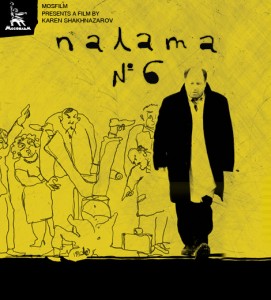
Ward No. 6 (2009) Karen Shakhnazarov and Aleksandr Gornovsky - Recommended
All I have to say is that slotting a dialog heavy Russian film based on story by Chekov at 10:00pm is like a very cruel joke on someone who has already worked eight hours and seen two movies. The merits of this film were definitely there, but let's just say I missed most of them.

Saturday, May 1, 2010

MSPIFF 2010: Day 7

The Topp Twins: Untouchable Girls (2009) Leanne Pooley - Recommended
Who are the Topp Twins? Perhaps it's a bonus that this incredibly entertaining survey of the life and times of the popular New Zealand singing and comedic duo, the Topp Twins, will also be an education for most American audiences. Jools and Lynda Topp are twin sisters from rural New Zealand who became homegrown hits in the 80s and are now kiwi icons. Making a name for themselves by drawing large crowds performing on the streets of Auckland, the Topps have since turned their irrepressible charm into multifaceted folk-singing variety act which includes dressing up as lovable stereotypes such as rancher and sportscaster Ken and Ken or glamour loving socialites Prue and Dilly. The unpredictable backstory to the Topp Twins is their activism and their ability to be political without being politicized. Being openly gay, speaking out for Maori rights, protesting apartheid and rallying for a nuclear-free New Zealand never undermined their popularity, in fact, quite the contrary. The film speaks wonders to the progressive nature of New Zealand, and the (unfortunate) conservatism of Americans. Leanne Pooley was approached by the twins to make the documentary after Jools was diagnosed with breast cancer and it was unclear whether or not she would pull through. Fortunately Jools did win the battle with cancer, and the documentary went on to win the People's Choice Award for Documentary at the Toronto International Film Festival (surprising everyone by beating out Michael Moore's Capitalism.) The Topp Twins was, without a doubt, the most fun documentary of the fest. Check out the trailer for the film here and you will see what I'm talking about.
(It would be a shame if The Topp Twins: Untouchable Girls did not get wider distribution beyond the festival circuit, but that seems to be the case. A DVD is available on the film's website, and although 30 bucks might seem a lot for a DVD, you can share it with your friends. That's what I plan on doing.)

My Tehran for Sale (2009) Granaz Moussavi - Not Recommended
My Tehran for Sale was the only film I saw from the 2010 Global Lens series at MSPIFF. Global Lens, a yearly series of solid, under-the-radar foreign films, permanently moved into the MSPIFF lineup last year. My Tehran for Sale follows a handful of twenty-something Iranians, each with their own way of dealing with social constraints of society. Sadaf has embraced professional life and takes a devil-may-care attitude about the risky practice of attending underground concerts and events. Her friend Marzieh, however, is a struggling actress and is suffocating under the oppression. When she falls in love with Saman, and Iranian living in Australia, Marzieh starts to see a light at the end of her artistic tunnel. But an unforeseen tragedy strikes and sends Marzieh's life into a tailspin. The strict rules in which Iranian filmmakers are forced to work under have made directors understandably pessimistic, and, as a result, unrelentingly somber. Even though first time director Granaz Moussavi now lives in Australia herself, the dark tone is carried over in her film. My Tehran triumphs in its existence: shot on the sly and smuggled out of the country for editing, it is incredible well made despite the obvious obstacles. But the film flounders with the heavy-handed melodrama forced upon Marzieh. I have no doubt that the frustrations of every one of these characters is very real, but when a guttural scream is emitted under pretext, it has an inevitable resonance of falsity.

Tuesday, April 27, 2010

MSPIFF 2010: Day 6

Alamar (2009) Pedro González-Rubio - Highly Recommended
I am going to deem Alamar the best film I have seen at the fest so far, knocking Looking for Eric out of that top slot. I was completely taken away by the beauty and simplicity of this film. Natan is the young son born to an Italian mother and Mexican father. When his mother decides she is going to leave the jungle and move back to Italy with her son, Natan goes on a final farewell visit with his father and grandfather on the island of Quintana Roo, 30 miles off coast in the Caribbean Sea. The three of them spend their time fishing, cooking, napping and playing as if none of it was their duty but was simply their pleasure. Diving for lobster and snappers among the reef with only the aid of a snorkel and a spear; fishing for barracuda with a spool of fishing line and a baited hook; taming a visiting egret by feeding it roaches; and cleaning and preparing the catch of the day—all are the unconscious endeavors far from the modern world. Director Pedro González-Rubio's oft quoted response to whether Alamar is a feature film or a documentary film is the evasive answer that "It is a film." What is clear about the the film is that no one is acting beyond what is natural. The father and son have a natural bond that you never question. But Alamar also exists in an idealistic realm beyond 'realism'. The elegant narrative plays out like a Greek myth with the father as the Greek god and his son the cherub that someday will have great power. It seems only natural for people to wonder if this myth is true. The finale shot, with Natan in Rome with his mother, seems to exist on another planet.
(Alamar is playing at the Best of the Fest, Sunday, May 2 at 9:30pm.)

The Oath (2010) Laura Poitras - Highly Recommended
From the award winning documentary filmmaker of My Country, My Country, Laura Poitras, The Oath is yet another very thoughtful documentary about the effects of the war in Iraq. Concerned with our misguided efforts of capturing and imprisoning enemy combatants, the film spends much of its time interviewing Abu Jandal, a high level al Qaeda operative and Osama bin Laden's bodyguard who now drives a cab in Yemen. Jandal was one of the U.S.'s first key informants after 9-11. In a Yemeni jail at the time, Jandal was an example of how the FBI's tactics of compassion, not the CIA's of torture, are more productive in interrogation. By taking part in a progressive program called the Dialogue Project, Jandal has pledged his life to non-violence after being released from prison. Jadal's life as a free man is contrasted with his brother-in-law, Salim Hamdan. Hamdam, wanted for being bin Laden's driver, was captured, most likely tortured and left to languish in prison at Guantanamo Bay. Despite the fact that Jandal carried the gun, and Hamdam sat behind the wheel, Jandal is the success story. Hamdam was the first to be tried under the dodgy laws set up for the prisoners at Guantanamo Bay, and was subsequently acquitted and released. Hamdam refused to take part in the film, but his words, read via letter, resonate. These two stories are delicately woven together and presented to the audience with little bias. The account that Jandal gives regarding how he learned about 9-11, and the fact that it was carried out by people he knew, is completely arresting.
(The Oath will be released in NYC on May 7.)

Air Doll (2009) Hirokazu Kore-eda - Undecided!
If I had never heard of Hirokazu Kore-eda, my feelings for Air Doll would be much different. As it is, I'm a fan of his films and admire his subtle style, and that is why I can not completely condemn this disappointing film. As the title implies, this film is about a blow up doll. Nozomi is owned by a lonely bachelor who has obviously given up on living women in favor of his docile and obedient doll. Treating her as his inanimate wife, he talks to her, baths her and of course has sex with her. Nozomi is not you average blow-up doll. She is far more modeled and realistic than the ones that you buy at the corner sex shop. One day, however, Nozomi animates. She gets a job in a video store (owned by a man who loves Fukasaku's Battles Without Honor & Humanity) and falls in love with her shy co-worker played by Kore-eda regular, Arata. Nozomi is, however, still an air doll who doesn't age and is susceptible to punctures. It's an absurd premise that almost works under Kore-eda's gentle guide. The mix of comedy, drama and the macabre I can take, but its horrendous slides into cheesy melodrama are unforgivable. I stuck with the film until that very last all-the-lonely-people montage where it completely lost me. I'm grateful that MSPIFF showed this film, because I have been eying the $45 Japanese DVD for about a month now. Boy am I glad I didn't buy that!

Saturday, April 24, 2010

MSPIFF 2010: Day 5

I'm a little behind on my film festival intake, but it has been so fruitful, I am going to do my best to catch up.

Harlan: In the Shadow of Jew Suess (2008) Felix Moeller - Recommended
Director Felix Moeller tackles the lesser known, but more successful, film director of Goebbels' propaganda machine. Veit Harlan was the director of the anti-Semitic film used to propagate the Nazi's agenda, Jew Süss (1940). Unlike Riefenstahl's Triumph of Will, it is obvious that the vicious nature of Jew Süss has kept it in the closet regardless of any artistic merits. Although notorious, especially in Europe, Jew Süss hardly gets mentioned outside academic and historical circles. Instead of doing a straightforward historical narrative of Harlan's life, Moeller spends his time interviewing the living members of Harlan's family. The children, grandchildren and nieces and nephews all give a very personal take on Veit, his film and the after effects on the family. It's a very colorful mix of philosophy, bitterness, and distanced rational. In an irony of irony, it turns out that Stanley Kubrick's last wife, Christiane, was Veit Harlan's niece. The fact is tossed out so quickly and quietly, that I had to do a double take to confirm what I just heard. Christiane noted a meeting between Veit and Stanley with humor, and mentioned that he always wanted to do a film about the era. Some of the relatives feel criminalized by their notorious relative and the film almost feels like an act of catharsis. Veit's first son, who was his most ardent critic while Veit was alive, comes off as the family member most at peace. Veit Harlan died in 1964, and although he was acquitted of war crimes, his career languished under the burden of the War and Jew Süss.
(You have another chance to see Harlan: In the Shadow of Jew Suess on Wednesday, April 28 at 4:15pm. It will probably not return theatrically to the Twin Cities.)


Mid August Lunch (2008) Gianni Di Gregorio - Recommended
When I first saw the trailer for Mid August Lunch, it offered the tag "Ffrom the creator of Gamorrah." It was pretty obvious that this was no Gamorrah, but I'm not marketer. The relation between the films is that the writer, Gianni Di Gregorio, responsible for the masterful adaptation of Roberto Saviano's book is the director and lead actor in Mid August Lunch. I would see Mid August Lunch as a film meant to wash the bad taste of the Camorra from his palate. In his directorial debut, Di Gregorio creates a charming romp that is more entertaining than it is slight. An aging bachelor, Gianni, acting as a caretaker for his mother, finds himself saddled with three other older women during Ferrogosto, one of the most important holidays in Italy where everything closes down. He takes in the the troublesome trio under coercion: the mother and aunt of the condo administrator to whom his mother is indebted, and the mother of a doctor willing to do a house visit on short notice. Under the dread of obligation to make these three women happy, along with his very opinionated mother, he must prepare a lunch appropriate for Ferrogosto. Di Gregorio does a fantastic job of taking the reigns of the lead character contending with responsibility with resignation that we can all relate to. There is a hilarious moment when a man comes to the door to visit Gianni and they go into his bedroom and shut the door. As the visiting man puts his hand down Gianni's pants, I heard a woman behind me indignantly say "Oh my goodness." The next second, however, the visiting man says, "Cough." He is, of course, a doctor, but that is not revealed until after the film confronts the audience's notions that a single man living with his mother must be gay. At 75 minutes, Mid August Lunch is short but very sweet.
(Mid August Lunch is currently in limited release and is scheduled to open at the Edina Cinema on May 7.)